Presented at SLEEP 2026
Obstructive sleep apnea (OSA) is traditionally quantified using the apnea-hypopnea index (AHI), a frequency-based metric that reflects the number of respiratory events per hour of sleep. However, AHI does not capture the physiological severity of these events—particularly the depth and duration of oxygen desaturation.
Hypoxic burden (HB) has emerged as a more physiologically informative metric. By quantifying the cumulative area under the curve of oxygen desaturation associated with respiratory events, HB has demonstrated stronger associations with cardiovascular and mortality outcomes than AHI alone. Increasing evidence suggests that HB may better reflect the true biological impact of sleep-disordered breathing across patient populations.
Despite growing interest in HB, relatively little research has explored how stage-specific hypoxic burden relates to disruptions in sleep architecture. This is particularly important given the critical roles of:
- REM sleep, associated with emotional regulation and cognitive processing
- Slow-wave sleep (N3), essential for memory consolidation, metabolic function, and cardiovascular health
Study Objectives
This study evaluated whether:
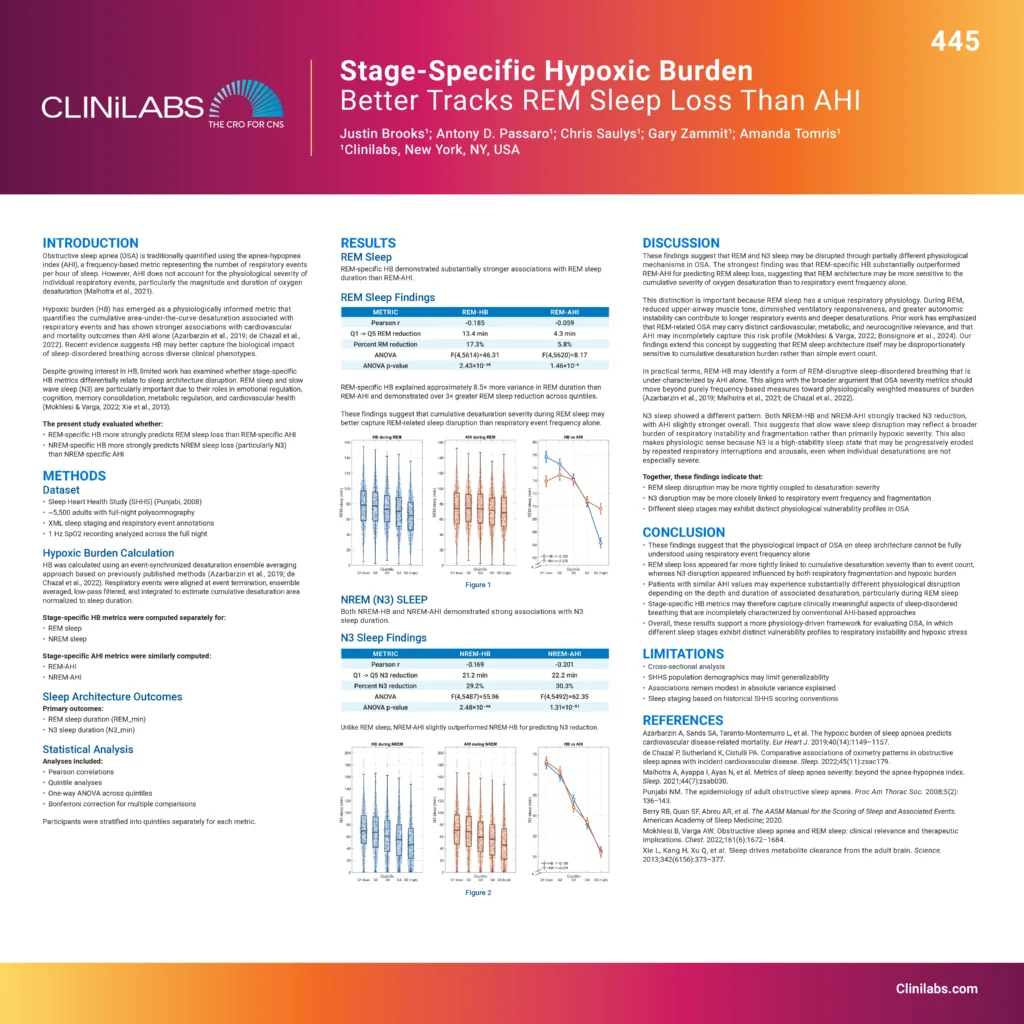
- REM-specific hypoxic burden more accurately predicts REM sleep loss than REM-specific AHI
- NREM-specific hypoxic burden provides additional insight into N3 (slow-wave) sleep disruption
Key Findings
- The physiological impact of OSA on sleep architecture cannot be fully understood using event frequency alone
- REM sleep loss is more closely linked to cumulative desaturation severity than to respiratory event count
- N3 disruption appears to be influenced by both respiratory fragmentation and hypoxic burden
- Patients with similar AHI values may experience substantially different physiological disruption, particularly during REM sleep
- Stage-specific hypoxic burden captures clinically meaningful aspects of OSA that are not fully characterized by AHI
Conclusion
These findings support a shift toward a more physiology-driven framework for evaluating OSA. Different sleep stages exhibit distinct vulnerabilities to respiratory instability and hypoxic stress—highlighting the importance of moving beyond traditional, frequency-based metrics like AHI.